




Heart disease is the No. 1 killer of American women and men — and has been for over 100 years. In fact, cardiovascular diseases are the top cause of adult deaths everywhere, responsible for 1 in 3 deaths worldwide.
Cardiologists say physical inactivity, smoking, high blood pressure, high cholesterol and diabetes are all to blame — as is an unhealthy diet full of refined grains, added sugars and the artery-clogging saturated fats found in red and processed meats and full-fat dairy.
The recently released 2025-2030 Dietary Guidelines for Americans restrict refined grains, added sugars and ultraprocessed foods (known as UPFs) — a move applauded by medical organizations.
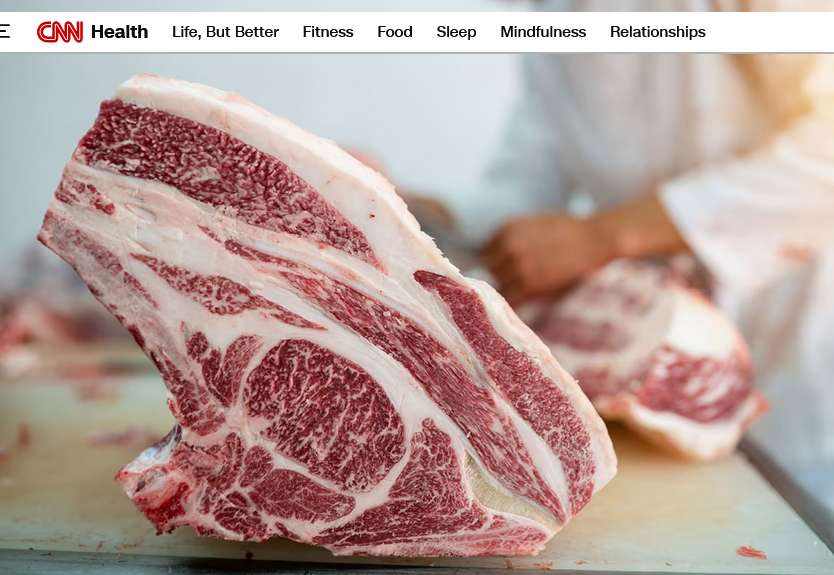
However, the revised food pyramid — which flips prior pyramids on their heads — also puts red meat and other foods full of protein and saturated fat in a starring role in the top tier, alongside fresh vegetables and fruits known to protect health.
Leading cardiologists tell CNN this is upside-down thinking.
“Promoting saturated fat and increasing the amount of protein goes against all nutrition and cardiology science,” said Dr. Kim Williams, chair of the department of medicine at the University of Louisville in Kentucky.
“We’ve been researching this for decades, and we definitively know saturated fat — such as butter fat, beef tallow, red and processed meat — are all closely associated with more deaths from cardiovascular disease,” said Williams, a past president of the American College of Cardiology. “This does not fall in line with President Trump’s executive order 14303, which mandates that all federal policies use the best scientific evidence available.”
Heart disease is the No. 1 killer of American women and men — and has been for over 100 years. In fact, cardiovascular diseases are the top cause of adult deaths everywhere, responsible for 1 in 3 deaths worldwide.
Cardiologists say physical inactivity, smoking, high blood pressure, high cholesterol and diabetes are all to blame — as is an unhealthy diet full of refined grains, added sugars and the artery-clogging saturated fats found in red and processed meats and full-fat dairy.
The recently released 2025-2030 Dietary Guidelines for Americans restrict refined grains, added sugars and ultraprocessed foods (known as UPFs) — a move applauded by medical organizations.
However, the revised food pyramid — which flips prior pyramids on their heads — also puts red meat and other foods full of protein and saturated fat in a starring role in the top tier, alongside fresh vegetables and fruits known to protect health.
Leading cardiologists tell CNN this is upside-down thinking.
“Promoting saturated fat and increasing the amount of protein goes against all nutrition and cardiology science,” said Dr. Kim Williams, chair of the department of medicine at the University of Louisville in Kentucky.
“We’ve been researching this for decades, and we definitively know saturated fat — such as butter fat, beef tallow, red and processed meat — are all closely associated with more deaths from cardiovascular disease,” said Williams, a past president of the American College of Cardiology. “This does not fall in line with President Trump’s executive order 14303, which mandates that all federal policies use the best scientific evidence available.”
That executive order, signed by Trump on May 23, 2025, called for a return to “a gold standard for science” to ensure “that Federal decisions are informed by the most credible, reliable, and impartial scientific evidence available.”
Yet it’s exactly the impartial, verified and credible science that the new guidelines ignore, according to cardiologists. In fact, randomized controlled clinical trials — the current gold standard of research — have found replacing saturated fats with vegetable and seed oils reduced cardiovascular disease by some 30%, similar to the benefits of statin medications.

“There’s no question that when we remove saturated fat from the diet and add in polyunsaturated and monounsaturated fats from fish, seed and plant sources, we save lives by improving cardiovascular health,” said Dr. Monica Aggarwal, an adjunct clinical associate professor of cardiovascular medicine at the University of Florida in Gainesville.
“People are going to look at the new pyramid and think ‘Oh, I can eat as much steak as I like.’ Social media is already full of headlines like: ‘Beef is back on top,’ or ‘Butter is back,’ or ‘Beef tallow is the way to go,” Aggarwal said. “Yet there is no debate that the saturated fat in those foods is linked to heart disease.”
Discarding decades of science
In a January 8 press conference on the new guidelines, federal officials spoke of their disdain for past nutritional guidance.
The new dietary guidelines call for less than 10% of total daily calories to come from saturated fats, not terribly far from AHA recommendations to keep unhealthy fats to less than 6%.
However, 10% or less is an impossible goal, experts say, if the major emphasis of the Make America Healthy Again movement is on eating more proteins with saturated fats.
The Nutrition Source, an online resource from the Harvard T.H. Chan School of Public Health, recently put the new dietary guidelines, which recommend three servings of dairy a day, to the test.
If all three of those dairy servings were full fat: whole milk with about 5 grams of saturated fat and nearly a cup of full-fat Greek yogurt with a single ounce of cheddar cheese — each of which have 6 grams of saturated fat — that’s a total of 17 grams.